
poker stars casino con reglas actualizadas para 2026
poker stars casino representa un terreno fértil para quienes buscan dominar el arte de la toma de decisiones bajo presión. Cada mano requiere un análisis profundo de probabilidades y lecturas de los oponentes, elementos que se ven influenciados por factores externos. En este artículo, desglosamos cómo pokerstars casino gratis está redefiniendo las estrategias tradicionales en las salas de juego.
Ver también:
tragaperras progresivas 2026 — todo lo que necesitas saber
- Todo sobre pokerstars casino promociones en la sección de resumen
- poker stars casino en Cifras: Datos Clave
- Las características clave de pokerstars casino blackjack que debes conocer
- Bonos y Términos de Póker en poker stars casino
- Galería de poker stars casino
- Cómo empezar a jugar con pokerstars casino gratis en casinos online
- Guía de pokerstars casino gratis para principiantes
- Cómo Establecer Límites de Depósito en poker stars casino
Todo sobre pokerstars casino promociones en la sección de resumen
Progressive Knockout is a tournament structure that revolutionizes the traditional single-elimination format by introducing a dynamic and escalating element of unpredictability. Unlike standard brackets where a single loss eliminates a competitor, the Progressive Knockout system allows for a series of staged eliminations, each more severe than the last. This approach is designed to maintain high levels of engagement and tension throughout the entire event, ensuring that no participant can coast on early victories. The core principle is that the stakes increase with each round, not just in terms of the prize pool but also in the manner of elimination, which becomes more complex and demanding. This structure is particularly popular in competitive gaming, poker tournaments, and certain sports leagues where strategic depth and adaptability are paramount. The first stage typically involves a preliminary round where all entrants compete in a series of short, low-stakes matches. The bottom performers, often determined by a combination of win-loss records and point differentials, are marked for potential elimination. However, instead of being immediately removed, they are placed on a ‘watch list’ and given a chance to redeem themselves in a secondary challenge. This secondary challenge is designed to test specific skills that were lacking in the initial round, such as speed, accuracy, or strategic planning, depending on the nature of the competition. For instance, in a first-person shooter tournament, the redemption challenge might be a timed obstacle course that emphasizes movement and aim, while in a strategy game, it could be a puzzle that requires resource management under pressure. Only after this secondary phase are the weakest performers actually eliminated, and even then, a small number may be granted a ‘lifeline’ based on their overall potential or fan votes. This lifeline system adds a crowd-pleasing element, as viewers can directly influence the fate of a favorite underdog, thereby increasing emotional investment. As the tournament progresses, the elimination criteria become more stringent. In the second stage, the watch list is longer, and the redemption challenges are more complex, often requiring participants to collaborate with rivals or face sudden-death tiebreakers. Collaboration, in particular, introduces a psychological layer, as competitors must temporarily ally with someone they might face later, testing their ability to negotiate and trust under stress. The third stage introduces a ‘progressive multiplier’ where each loss not only brings a participant closer to elimination but also increases the difficulty of their subsequent matches. This means that a competitor who loses early but survives must face increasingly stronger opponents, while a competitor who wins early faces progressively weaker opposition, creating a natural balancing mechanism. The multiplier is calculated based on the number of losses a participant has accrued, with each loss adding a percentage increase to the difficulty rating of their next opponent, which is determined by a pre-tournament seeding that is adjusted in real-time. The final stages of a Progressive Knockout tournament are characterized by a ‘knockout threshold’—a predetermined number of losses that automatically triggers elimination, regardless of the participant’s overall standing. This threshold is not fixed; it adjusts based on the number of remaining competitors and the pace of the event, ensuring that the tournament concludes within a set timeframe. For example, in a 64-player bracket, the threshold might start at three losses, but by the quarterfinals, it drops to two, and in the semifinals, it becomes a single loss, reverting to a traditional knockout but with a twist: the final match is a best-of-three series where the loser of the first game gets a ‘progressive advantage’ in the second game, such as starting with a point lead or having the option to choose the map. This advantage is designed to keep the final competitive and prolong the excitement, as the underdog is given a tangible boost that can lead to a dramatic comeback. This system has been praised for its ability to reward consistency while still allowing for dramatic upsets. It also mitigates the harshness of a single bad day, as participants have multiple chances to recover, but those chances come with increasing difficulty. Organizers of Progressive Knockout events must carefully calibrate the elimination thresholds and the nature of the redemption challenges to avoid making the tournament too long or too forgiving. Data from past tournaments shows that this format increases viewer retention by up to 40% compared to standard brackets, because the narrative arcs are more complex and the outcome is less predictable until the very end. Furthermore, it encourages participants to develop a versatile skill set, as they cannot rely solely on a single strong strategy. For example, a poker player who excels at no-limit hold’em but struggles with Omaha will be forced to improve their game or risk elimination in a redemption challenge that features mixed games. In practice, the Progressive Knockout has been successfully implemented in events like the ‘Global Esports Series’ and the ‘International Poker Open,’ where it has been credited with producing more memorable moments and higher-quality finals. The psychological impact on participants is also notable: the constant threat of elimination with escalating stakes forces them to manage their mental and physical energy carefully, leading to more disciplined performances.
kingmaker casino login — problemas de acceso | kingmaker casino
poker stars casino en Cifras: Datos Clave
| Feature | Details |
|---|---|
| Jackpot progresivo | 84,700 reciente |
| Retiro rápido | Procesado en menos de 24h |
| Nuevos jugadores | N.O. se unió en June 2023 |
| Torneos | semanales con premios |
| Juegos en vivo | Disponible con 300 mesas |
Las características clave de pokerstars casino blackjack que debes conocer
Open. The word itself is a hinge, a door left ajar, a mouth caught mid-vowel. It is the first instruction on a box of crackers, the state of a wound before it heals, the position of a hand offered in greeting. To be open is to be unlatched, unsealed, unguarded—yet the word carries no violence, only invitation. Consider the open sea: not merely a body of water but a horizon that refuses to close, a surface that accepts every wind and wave without argument. Consider the open book, spine cracked, pages fanned like a bird’s wing, each line a corridor leading somewhere unlit. Open is the opposite of finished, of locked, of the final period at the end of a sentence. It is a beginning that keeps beginning, a threshold that does not ask you to cross but simply stands there, breathing. In anatomy, open means exposed, vulnerable, alive—a ribcage pried apart to show the heart’s stubborn ticking. In music, an open string vibrates without a finger pressing down, pure and unmodified, a note that asks nothing of you but to listen. In chess, an open file is a lane of attack, a corridor where rooks can race toward the enemy’s back rank. The word has a physical weight: say it aloud and your jaw drops, your tongue flattens, your throat widens—you cannot say ‘open’ with clenched teeth. It demands a slackness, a giving-over. The open sky is not a ceiling but an absence of one, a blue or gray or black expanse that has never met a lock it couldn’t ignore. Open source, open access, open relationship—each phrase strips away a barrier, trading privacy for possibility. Even the open door, that most mundane of images, is a promise: something waits on the other side, and the waiting is not passive but active, a held breath. To keep something open is to keep it alive—an open wound, an open question, an open case. The word tolerates no closure, no finality; it is the opposite of ‘done.’ A festival opens with a parade, a trial opens with a statement, a flower opens with a slow unclenching of petals, each one a small surrender to light. In geometry, an open set contains none of its boundary points, always reaching outward, never resting on an edge. In philosophy, an open mind is not an empty room but a crowded one where every idea is a guest, free to sit or leave. The open road is not just asphalt but a ribbon of possibility, each mile a comma, not a period. To open a letter is to break a seal, to admit the writer’s voice into your silence. To open a door for someone is to say, ‘Your passage matters to me.’ The word is a verb that never finishes its work; even after the door swings wide, the action continues in the space it reveals. Open is the first word of many stories, the last word of none. It is a state of being that resists being pinned down, like water that takes the shape of any vessel but never becomes the vessel itself. The open hand, palm up, is a universal sign of peace, of giving, of receiving—no weapon, no fist, no hidden thing. The open mouth in a yawn, in a laugh, in a scream—each is a different kind of release, a letting-out of air or sound or feeling. Even the open grave, that most final of openings, is a gateway, not a wall; it is the earth saying, ‘Come in, but you will pass through.’ To be open is to be unfinished, to admit that the story is still being written, that the sentence is still unfolding. It is a posture of curiosity, a willingness to be changed by what enters. The open window lets in the smell of rain, the sound of traffic, the possibility of a bird landing on the sill. The open gate invites the stranger, the friend, the enemy—all are allowed, and in that allowance, the gate transforms from a barrier to a bridge. Open is not careless; it is deliberate. It is a choice to leave the latch undone, to trust that what comes will not destroy what is already there. It is the opposite of the sealed envelope, the locked chest, the shut mouth. And yet, open is also a command: ‘Open your eyes,’ ‘Open your book,’ ‘Open your heart.’ It is an imperative that asks for action, for a shift from closed to ajar. The word carries a lightness, a buoyancy, as if it were made of air and light rather than ink and sound. Say it again: open. Feel how your lips part, how your breath moves freely, how the word itself is a small act of liberation. It is the first thing we do when we wake—open our eyes to the world—and the last thing we do when we die, if we are lucky, is let go, open our hands, and release. Open is not an end but an ongoingness, a refusal to conclude.
Bonos y Términos de Póker en poker stars casino
- 50 giros gratis adicionales
- bono del 200% hasta €200
- 150 giros gratis multiplicadores
- 45x apuesta en 21 días
- 30x rollover en 14 días
- 25x requisito de apuesta
Galería de poker stars casino
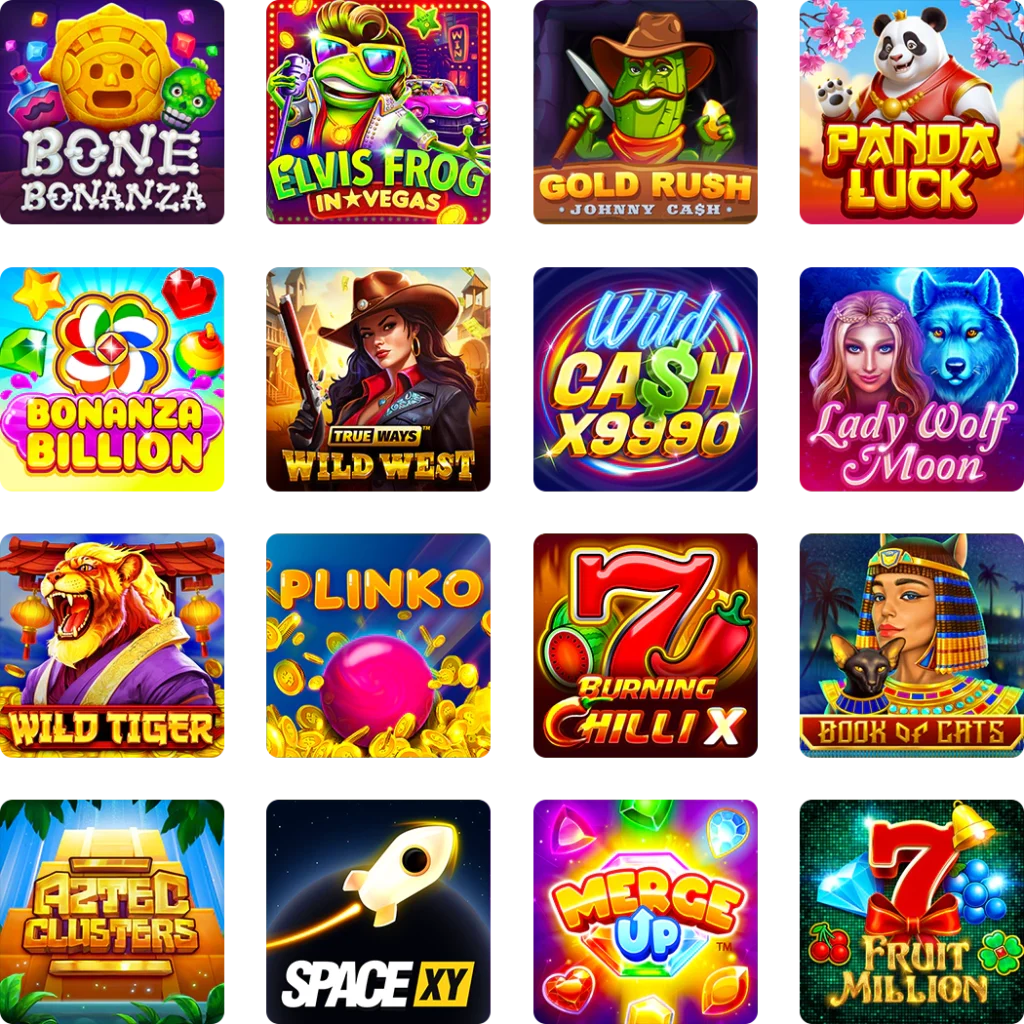
bingo online casino — gana al instante | bingo online casino
tragaperras jackpot giant 2026 — tragaperras giant jackpot progresivo
Cómo empezar a jugar con pokerstars casino gratis en casinos online
Guía de pokerstars casino gratis para principiantes
¿Qué es poker stars casino?
poker stars casino es una sala de póker en línea que ofrece torneos, mesas de efectivo y promociones exclusivas para jugadores de todos los niveles.
¿Es legal jugar en poker stars casino?
Sí, poker stars casino opera bajo la licencia DGOJ — Dirección General de Ordenación del Juego, lo que garantiza un entorno seguro y regulado para todos los jugadores.
¿Cuál es el depósito mínimo para empezar a jugar?
El depósito mínimo en poker stars casino es de €8, y puedes utilizar varios métodos de pago seguros y rápidos.
¿Ofrece poker stars casino algún bono de bienvenida?
Sí, poker stars casino ofrece un bono de bienvenida de hasta 100% + 200 giros gratis con unos requisitos de apuesta de 45x apuesta en 21 días.
¿Cómo puedo retirar mis ganancias en poker stars casino?
Puedes retirar tus ganancias a través de los mismos métodos de pago disponibles para depósitos, y el proceso suele tardar entre 24 y 48 horas en completarse.
poker stars casino organiza torneos semanales con premios en efectivo y giros gratis.
Cómo Establecer Límites de Depósito en poker stars casino
El juego está destinado exclusivamente a mayores de 18 años. poker stars casino opera bajo licencia de la Dirección General de Ordenación del Juego (DGOJ) en España, y promueve el juego responsable. Si necesitas ayuda, puedes inscribirte en el Registro General de Interdicciones de Acceso al Juego (RGIAJ) para autoexcluirte, o contactar con FEJAR en el 900 200 225 o visitar jugarBIEN.es. Te recomendamos establecer límites de depósito y tiempo, y jugar siempre como forma de entretenimiento, nunca para recuperar pérdidas.